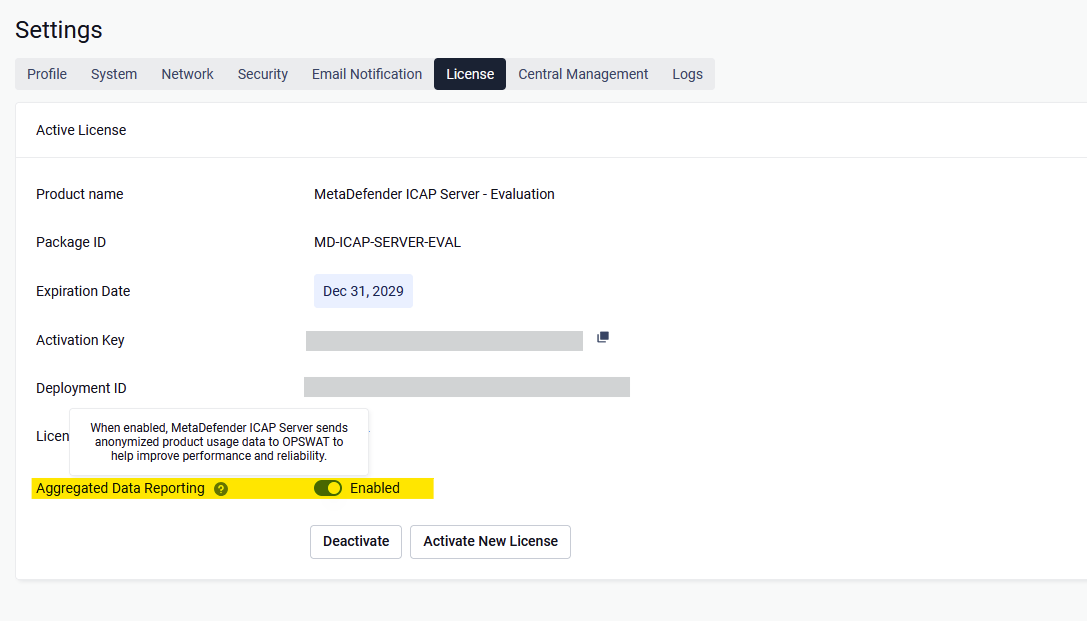
MD ICAP Server optionally reports anonymous aggregated data about general usage to help OPSWAT improve its products.
💡 Note: Participation in this program is optional. You may disable Aggregated Data Reporting at any time if you would prefer not to report any Aggregated Data.
What is Aggregated Data?
As defined in the OPSWAT Terms of Service, "Aggregated Data" means statistics, measures, and other information or data that is anonymous — that is, de-identified, aggregated, or otherwise rendered not reasonably identifiable to any person or entity.
Why is Aggregated Data collected?
Aggregated Data Reporting is used solely to help OPSWAT improve its products, including product performance, reliability, and the features customers rely on most. Understanding how features are used in aggregate allows OPSWAT to prioritize improvements and resolve issues faster. For full details, see the OPSWAT Terms of Service.
What is being collected?
OPSWAT takes privacy and security seriously. Aggregated Data Reporting tracks general, anonymized usage information, which may include:
Product and component version information
Feature and configuration usage in aggregate
General environment information (e.g., operating system, deployment type)
Performance and reliability measures (e.g., processing throughput, error rates)
All reported data is anonymous and aggregated in accordance with the definition of "Aggregated Data" in the OPSWAT Terms of Service.
What about sensitive data?
Aggregated Data Reporting does not collect any information that could reasonably identify a person or entity, including but not limited to: credentials, file contents, scanned data, file paths, environment variables, or personally identifiable information
How do I disable Aggregated Data Reporting?
Setting > License > switch off Aggregated Data Reporting